Overview
Uncover the ancient secrets of Egypt amid the welcoming culture of today, with a 12-day cruisetour through Egypt on board modern Nile ships.
Journey Highlights
-
Accommodation on board -
Transportation during tours -
Transfers to/from the airport
-
International Flights -
Travel Insurance -
Personal Expenses -
Tips for guides and drivers
Itinerary
Arrive and check in to your hotel. It has been said of Egypt’s exhilarating capital, “He who has not seen Cairo has not seen the world.” Certainly, the heart of the nation beats with an unbridled passion in this city made prosperous over millennia as a stopover for Sahara caravans on trade routes to Byzantium. Amid the stimulating strum, the insistent beauty of everyday life reigns here, with the serene Nile sliding through like an entrancing serpent. Cairo’s very age mesmerizes; its monuments have stood here for more than 5,000 years.
Egypt’s First Pyramid and an Imposing Fortress Visit two UNESCO sites, an ancient burial ground and a Citadel that was Egypt’s seat of government for 700 years. Meet your guide and journey to the necropolis of Sakkara, believed to be the first pyramid built in ancient Egypt. Enter the complex via a narrow portal in a great wall that once surrounded the necropolis. See the enduring structure of the step pyramid, then enter one of the tombs, some of which are decorated with the finest paintings from the Old Kingdom period. Enjoy lunch before returning to Cairo to explore the Citadel of Saladin (or the Citadel of the Mountain). Perched on a rocky hill, its great dome and towering minarets dominate the Cairo skyline. Home to 60 mosques spanning the centuries, its most notable is the Mosque of Muhammad Ali, sometimes called the “Alabaster Mosque” for its gleaming interiors. * Moderate - Walking portions may be long and somewhat challenging with occasional step-ups, stairs and inclines. Total time walking or standing normally ranges from 1.5 to 3 hours. Cairo’s Bustling and Colorful Souk Experience the energy and centuries-old tradition of shopping in Cairo, followed by a traditional dinner. Join your guide for a drive to Khan el-Khalili, the sprawling outdoor marketplace where Old Cairo comes to life. Its narrow warrens are teeming with all manner of goods. After an orientation, you will have time to browse its stalls selling brassware, lanterns and jewelry. The infinite wares tell only part of Khan el-Khalili’s story; this was a terminus on ancient trade routes and its rich atmosphere has changed little since Berbers, Turks and others converged here on camelback. After time to explore, and perhaps join in the long and good-natured tradition of haggling, you will continue to a local restaurant and enjoy a typical Egyptian dinner.
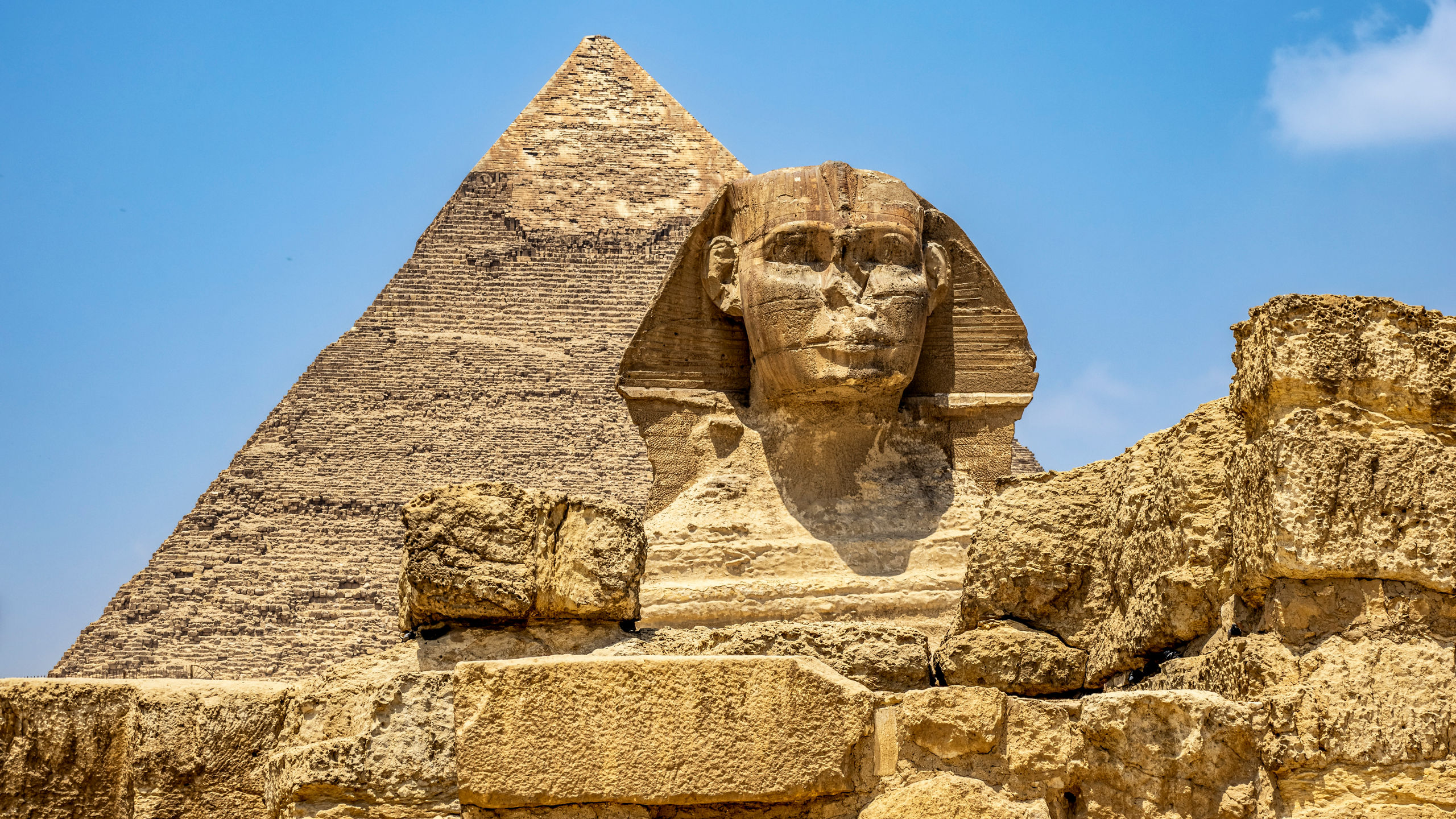
A captivating world that has withstood the tests of time unfolds beyond the medieval walls enclosing Old Cairo. Muizz Street, named for the Fatimid caliph who established Cairo as Egypt’s capital in 969, was the city’s main thoroughfare, running between the 11th-century city gates Bab al-Futuh and Bab Zuweila. Its splendid Islamic architecture—from elegant mosques and mausoleums to ornate palaces and former residences of Egyptian dignitaries and prominent merchants—provides a glimpse into the glory of the Fatimid dynasty and the periods that followed. mmerse yourself in the past by exploring a vast collection of artifacts and visiting iconic landmarks. Travel the streets of Cairo by motor coach and arrive at the Grand Egyptian Museum. This state-of-the-art facility hosts over 100,000 artifacts and is the largest archaeological museum in the world. Discover ancient Egypt’s legacy with your guide, learning about the rise of society and royals, construction of the pyramids, and military conquests. Step into the past as you walk through King Tut’s tomb collection. After, explore on your own, perhaps enjoying lunch at the on-site restaurant before driving to the Giza Plateau. See the Pyramids of Khafre and Menkaure and the imposing Great Pyramid of Khufu, the last of the Seven Wonders of the Ancient World. View the Abu al-Hol, the Great Sphinx of Giza, built to guard the tombs and ward off raiders and enemies of the pharaohs. * Moderate - Walking portions may be long and somewhat challenging with occasional step-ups, stairs and inclines. Total time walking or standing normally ranges from 1.5 to 3 hours.
After breakfast, check out of your hotel and fly to your embarkation city. Luxor is set on the east bank of the Nile River and once served as the capital of Egypt’s New Kingdom. Today, it is a UNESCO World Heritage Site lined with beautiful colonial hotels and some of the world’s most ancient and significant ruins. Many consider this city, watched over by graceful single-sailed feluccas plying the Nile, one of the world’s great open air museums. The sprawling Temples of Luxor and Karnak on the east bank are linked by the ancient Avenue of the Sphinxes. On the west bank, in the Valley of the Kings, lie the tombs of Egypt’s great pharaohs. Visit the Temple of Karnak, among the world’s largest ancient temple complexes. Marvel at its great Hypostyle Hall, a forest of ancient columns that once supported a towering ceiling, and its huge sacred lake. Learn more about this massive complex, embellished over centuries by every major pharaoh. After time here, continue to the Luxor Heritage Center, and explore the center’s interactive showcase documenting the country’s history from ancient times to the present. Tour the Forsan al-Sama’a Hall, with its exhibits featuring astrological equipment, and the 3D Show Hall, home to selected archaeological pieces from the Pharaonic, Coptic and Islamic eras. Afterward, visit the library, which houses more than 10,000 books on Egyptian history in several languages and features a dedicated map room. Visit one of the most breathtaking temples in Luxor, spiritual capital of Egypt for 15 centuries. Begin with your guide at the Temple of Luxor. This magnificent Ancient Egyptian temple complex was built in approximately 1400 BC by Amenhotep III and Ramses II. Enter through its massive pylons; as you explore, your guide will interpret the ancient hieroglyphs, some of which illustrate the extravagant Opet festival held to ensure a good harvest. One of the obelisks and several of the temple’s statues now reside in Paris. You will also see remains of the Avenue of the Sphinxes, which links Luxor to Karnak. Beyond lies the Great Court of Ramses II, whose walls are adorned with the names and titles of his 17 sons. In 1989, during a period of restoration, a cache of 26 statues was found here, buried by priests in Roman times
Known in ancient Egypt as Caene, Qena’s situation on the banks of the Nile River has bolstered its prosperity over millennia. Merchants and travelers have long journeyed here from the Red Sea, through the valley, bringing goods from Persia and beyond. The Sheikh el-Qenawi Mosque on the main square serves as a monument to the city’s rich and all-embracing Islamic and Sufi past. Qena is mostly known as the gateway to the magnificent ruins of the Dendera Temple. Its stone gate and towering columns adorned with hieroglyphics are some of Egypt’s best-preserved structures. View Ancient Art and Architecture Return to the time of the pharaohs with a tour of Dendera Temple, one of Egypt’s best -preserved temple complexes. Located on the west bank of the Nile River on the edge of the desert, this massive complex dates back to the mid-4th century BC, though archaeologists believe a temple has existed on the site since 2250 BC. Visit the main temple, Hathor, and admire the many examples of Ptolemaic Egyptian art adorning its chambers. View the Dendera Zodiac, a unique bas-relief sculpture from the Greco-Roman period that maps the ancient sky. The original was taken by the French in 1820 and now sits in the Louvre; what remains is a replica. Also, examine the controversial Dendera Light, three stone reliefs depicting what some say was ancient Egyptian electrical lighting technology (others contest it represents Egyptian mythology). Explore the subterranean necropolis and crypts before returning to your Hotel
Burial Places of Egyptian Royalty Discover the complex structures and intricate carvings that decorate some of Egypt’s most renowned tombs. Travel to the stark hills of the Nile’s west bank in Luxor, known as the Valley of the Kings. Here, pharaohs’ bodies were draped in gold and jewels and buried in elaborate tunnels decorated with intricate paintings. In 1922, Howard Carter discovered Tutankhamen’s relatively untouched tomb in this valley, bringing the world’s attention to this royal necropolis. Before the heat of the day sets in, visit Seti I’s tomb to see its well-preserved reliefs and vaulted ceilings that are inscribed with the story of the Sun God, Ra. After, explore a selection of tombs on your own before driving to the Mortuary Temple of Hatshepsut, a female pharaoh, whose tomb is carved into the Theban Hills. Walk atop its terrace to take in its impressive statues before returning to your Hotel
Ancient Egyptians knew Esna as Latopolis, named for the largest of the perch species that swam in the Nile’s sacred waters. Its ancient past lives on in the colorful street market overflowing with fabrics, carpets, brassware, mother-of-pearl keepsakes and more. Esna’s glorious Temple of Khnum is celebrated for its 1st-century Roman Hypostyle Hall, 24 columns topped with intricately carved floral capitals. Its walls are adorned with images of Roman emperors making offerings to Egyptian gods. Discover Greco-Roman Dedication to Egypt and its Gods Visit Esna, once the ancient site of Latopolis, and explore its temple, primarily dedicated to the god Khnum. A water god, Khnum was worshipped as the guardian of the source of the Nile and was said to have fashioned humankind from his potter’s wheel. The temple was thought to have been one of the latest temples built by the ancient Egyptians. See the well-preserved Hypostyle Hall, whose back wall is said to have been the facade of the old Ptolemaic temple. Admire the intricate carvings adorning towering columns and marvel at ancient wall paintings that still retain their original color. Witness the last known hieroglyphic inscriptions ever recorded, by the Roman Emperor Dios in 250 AD.
Learn about the Aswan Dam’s flood control, browse a souk and sail the Nile in a felucca.
Meet locals in a Nubian village, explore the Temples of Philae and discover how papyrus is made.
Encounter Kom Ombo Temple, dedicated to two gods, with both sides being identical.
Discover the ancient Temple of Horus and see the multiple statues of its namesake falcon god.
Explore the city of ancient monuments, many of which have stood for thousands of years before your departure.
Journey Impressions
Prices vary based on season and group size.